Loading...
Please wait while we load the content...

Loading...
Please wait while we load the content...
Loading...
Please wait while we load the content...
Explore peer - reviewed titles across the humanities and social sciences - rigorous research, fresh perspectives, and scholarship that inspires dialogue across disciplines.
Stay informed about our latest publications, calls for proposals, author news, events, and special announcements.
Join our community of scholars, librarians, authors, and readers and receive the latest updates from Vernon Press directly in your inbox.

From special discounts and global distribution partners to downloadable catalogs, flyers, and high-resolution covers, we make it easy to enrich your library’s collection. Access bibliographic data, explore subject-specific listings, and stay updated on forthcoming titles.
Become part of our librarian network and access dedicated tools, discounts, and resources to support collection development and promote new titles to your patrons.

Partner with Vernon Press to provide your customers with high-quality, peer-reviewed scholarship. We offer flexible ordering options, reseller agreements, and promotional materials to support your sales and outreach.

Vernon Press provides dedicated resources to help instructors adopt our books for courses and to support students with affordable access to high-quality scholarship. From desk and examination copies to tailored student editions, we aim to make our titles accessible in the classroom.

Edited by: Dhishna Pannikot (National Institute of Technology Karnataka, India) and Tanupriya (CHRIST (Deemed to be University), Delhi NCR)
'Queer Representation in Literature and Culture' offers a timely and critical exploration of how queerness is depicted, negotiated, and resisted across diverse literary and cultural texts. Bringing together interdisciplinary perspectives, the volume examines queer identities, desires, and politics through the lenses of decoloniality, and intersectionality. With contributions that span literature, cinema, digital media, and popular culture, this book foregrounds voices and narratives that challenge heteronormative, and patriarchal frameworks. Accessible yet scholarly, it is an essential resource for those interested in the intersections of gender, sexuality, culture, and power in contemporary discourse.

By: Andrew Newberg (Thomas Jefferson University) and Mary Clare Smith (Sisters of Notre Dame)
El tema de la neuroteología ha visto incrementada su popularidad en los ámbitos académicos, religiosos y divulgativos. Este campo de estudio investiga la intersección entre el cerebro y el fenómeno espiritual y religioso. Sin embargo, no se ha intentado de manera exhaustiva explorar específicamente cómo el pensamiento y la experiencia católica pueden estar relacionados con la neuroteología. El propósito de 'Neuroteología Católica' es abordar íntegramente esta área inexplorada. Los temas se relacionan con un enfoque neuroteológico de creencias fundamentales del catolicismo derivadas de la Escritura y la Tradición, una exploración de los diversos elementos del catolicismo, de los rituales y prácticas católicas, así como una revisión de la espiritualidad y el misticismo católico. Se ha tenido en consideración a diferentes académicos especializados en cuanto a la relación entre sus ideas o enseñanzas y los distintos procesos mentales. En 'Neuroteología Católica' se abordan estos temas de una manera accesible, incorporando aspectos científicos, religiosos, filosóficos y teológicos dentro del campo emergente de la neuroteología. Al revisar estos conceptos a través de argumentos sencillos y, a la vez, complejos, los lectores, sin importar su contexto, serán capaces de entender las dificultades y la amplitud de la neuroteología desde una perspectiva católica. Para profundizar, se abordan cuestiones como: una revisión de la neurociencia y las técnicas neurocientíficas; las experiencias religiosas y espirituales; el desarrollo y análisis teológico; el ritual y la liturgia; la filosofía, epistemología y ética; y las implicaciones sociales, todo desde el punto de vista del catolicismo.
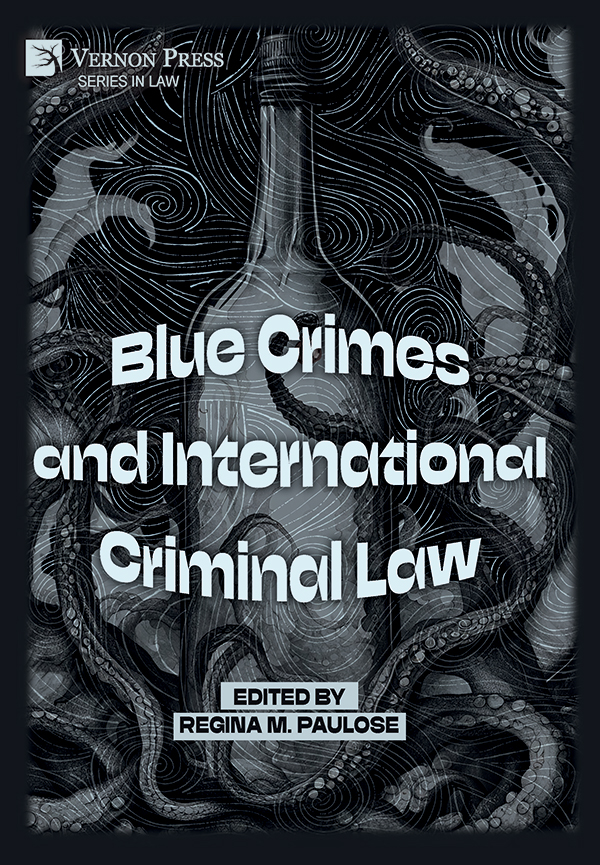
Edited by: Regina M. Paulose (International Criminal Law Attorney)
'Blue Crimes and International Criminal Law' is a multi-author volume which explores the connection between criminal law and water (including our oceans and other bodies of water). The volume seeks to contribute to evolving discourse around water rights and water justice around the world. This novel volume surveys topics such as climate justice and blue crimes, water governance, illegal, unregulated, and underreported fishing, Rights of Nature, and examines the utility of ocean treaties and justice and accountability mechanisms within international criminal law, 'Blue Crimes and International Criminal Law' is a companion volume to 'Green Crimes and International Criminal Law.'
By: Paolo Diana (University of Salerno, Italy)
'The Digital Shift and the Social Research: Methods and Practices' offers a comprehensive exploration of how the digital era, particularly in the wake of the COVID-19 pandemic, has transformed the field of social research. Drawing on both theoretical discussions and empirical studies, the book provides an in-depth analysis of the impact of digital tools on research methods, behaviour, and interactions, while addressing the ethical challenges that arise in online contexts. The first part of the book examines the expansion of traditional research methods through digital platforms, with a focus on how these innovations shape social norms and practices. The second part shifts attention to education, presenting strategies to improve student engagement and foster collaborative learning in the virtual classroom. The third part highlights groundbreaking case studies from the University of Salerno, illustrating innovative pedagogical approaches in teaching social research methodology. By integrating insights from across the fields of digital research, pedagogy, and ethics, this work challenges researchers and educators alike to rethink conventional approaches and adapt to the rapidly changing digital environment. Ideal for students, educators, and professionals, it serves as both a reference and a practical guide for navigating the evolving landscape of social research. Original and timely, this book will appeal to academics, practitioners, and researchers in social sciences, providing not only theoretical perspectives but also hands-on solutions for digital research and learning environments.
By: Marie-Louise Winbladh
In Israel, Palestine, Cyprus and Greece, the reconstruction of the past through archaeology has been used to strengthen national identity. Narratives about the past and origin myths have been constructed for political purposes. Cyprus and Palestine have both suffered from British colonialism since the early twentieth century, which has had a profound influence on their cultural heritage. Through nationalism, archaeology has been exploited by far-right movements and political parties to claim ownership of heritage and has become an efficient political tool. In Israel, archaeology and religion have been exploited to construct the Israeli state and still play a crucial role. The country claims to be the conqueror of Palestine under the protection of God, who they believe gave them possession of the land. Western religious groups are convinced that it is the religious duty of Christians to support the modern nation-state of Israel. Biblical archaeology has become an ultra-religious American speciality, marked by fraud and pseudoresearch. Notorious smuggling scandals were staged by American Christian multibillionaires buying artefacts looted from the National Museum of Iraq and other countries. Looting, plundering and blacklisting are among the most serious problems in Cyprus, causing irreparable damage to artefacts, monuments and society. Palestine’s rich archaeological, historical, and religious heritage has been undermined by occupation and land confiscation. Hundreds of sites have been looted during the Israeli occupation, and an illegal trade of ancient artefacts has occurred on a large scale. Populism is frequently associated with extreme nationalism and racism. Over the past few years, white nationalists and supremacists have seized the history of Greece and Rome. White nationalists and neo-Nazis in the US have used the slogan “Classics Made Great Again” showing their obsession with ancient sculptures and their alleged whiteness. When visiting Jerusalem, the Trump administration promoted an evangelical program where the politics of moral superiority is associated with white Christian supremacy.
Edited by: Bruno Nowendsztern (Arizona State University) and Ana Silvia Cervantes (Arizona State University)
El deporte ha sido visto como una de las prácticas más importantes dentro de la constitución de muchas sociedades modernas. Así, tanto la práctica deportiva como la expectación generada en torno al deporte han derivado en dinámicas diversas que han conformado las identidades individuales y sociales. Dentro del mundo de habla hispana, específicamente, algunas narrativas ligadas a deportes han trascendido hasta construir identidades que tocan desde el plano social y político hasta el de la condición de género y las masculinidades. En este libro, titulado 'Arte y deporte en Hispanoamérica: La cultura deportiva en la literatura y el cine,' la meta es atender a los distintos espacios sobre la práctica y utilización del deporte dentro de las narrativas como la ficción literaria o el cine. Los trabajos de los investigadores que integran este volumen tienen como objetivo ofrecer un panorama contemporáneo sobre distintos aspectos de prácticas deportivas a lo largo de todo el mundo hispano: desde la literatura de fútbol en Sudamérica y la península española hasta los deportes y espectáculos de combate que forman parte de Norte y Centroamérica. Brevemente, las partes que componen el libro son la relación del fútbol con la identidad nacional, la relación del deporte con la creación de la identidad individual femenina y de inmigración, el análisis de personajes de ficción literaria que indagan en los pormenores del éxito y el fracaso personal dentro del deporte y, finalmente, algunos de los aspectos que trascienden más allá de lo que es la práctica o espectáculo deportivo, así como los recursos creativos que el lenguaje deportivo puede ofrecer a la literatura.
Edited by: Adam Devitt (California State University)
Within sociocultural traditions, language, dialogue, and social literacies play an institutional role in learning and human development. Discourse practices, however, go far beyond the traditional focus of using speaking and listening to support the learning of content knowledge. Teacher discourse practices ought to promote critical literacies and linguistic practices, and promote anti-racism and social and environmental justice. Classroom discourse, however, is missing from teacher education programs on a large scale in these significant ways. Teacher educators need to understand the social and political policies, pedagogical role, and multitude of practices for helping pre-service teachers and teacher practitioners learn to acquire and facilitate quality discursive practices in K-12 schools and understand related pedagogy. This book, ‘Cultivating Dialogue, Language, and Literacy for Social Justice in Teacher Education’, offers a variety of models for integrating discourse practices and pedagogies into the field of teacher education, including pre-service teaching, professional development, and even critiques on policy and subsequent affordances and consequences that inhibit or promote the quality of teacher discourse and the purposes for which teachers utilize classroom discourse. I would recommend this book for teacher education programs as well as professional developers who work with pre- and in-service teachers. Additionally, I recommend this book for researchers committed not only to classroom discourse analysis, but to promote speaking and listening among teachers and students in ways that enhance learning and development.
Edited by: Yasuko Kase (University of the Ryukyus, Japan) and Eliko Kosaka (Hosei University, Japan)
With a focus on the transpacific and transnational relationship between North America and Asia, 'Emerging from the Rubble: Asian/American Writings on Disasters' explores Asian/Americans’ complex and nuanced involvement in disastrous events. Included in this purview of disaster are not only the damages and threats of current ongoing climate change but also the long-lasting ruining effects inflicted by imperialism, neo/colonialism, wars, and these historical components’ entanglement with global capitalism that have generated both spontaneous and slow and/or prolonged violent effects. Moreover, disasters can be acknowledged as manifestations of the Anthropocene — an epoch shaped by human activity — or what scholars like Jason W. Moore and Donna J. Harraway term the ‘Capitalocene,’ a paradigm where nature and capitalist society are deeply intertwined, co-creating an intricate web of life. Asian/American involvement in such a web has never been simple but convoluted: some of them have experienced tremendous losses, whereas others have perpetuated obfuscation of the truth and/or induced violence, often contingently with or without acknowledging the facts. When considering Asian migrants including refugees from Southeast Asia who had little option but to seek asylum in the U.S., and Asian Americans who have pursued their “happiness” under the U.S.’s capitalist premise of constant progress, protection of “human rights,” and freedom of “choice,” it is important to note that Asian migrants and Asian ‘Americans’ have become simultaneously active players and exploited individuals within the context of U.S. racial capitalism. Acknowledging the impossibility of clearly differentiating natural and human-made disasters, scholars who contribute to this volume note the reciprocal influences between nature and civilization. They examine how the entanglements of natural and human-made disasters lead to the acceleration and expansion of damage. This volume explores how Asian Americans’ connections with their ancestral origins along with their particular racial positions, social classes, and socio-historical backgrounds in North American societies force them to experience and witness disastrous events differently from the mainstream discourse on eco-crises.
Edited by: Laura Blount Carper (Texas A&M University-Texarkana)
'Innovative Approaches to Narratives in Health Communication' provides in-depth research studies, literature reviews, and step-by-step instructions for a variety of health communication contexts to help improve overall satisfaction and the empowerment of others. 'Innovative Approaches to Narratives in Health Communication' is intended to be used in many health-related contexts including, but not limited to, the classroom, further research, and health care professionals. While some texts focus on narratives in public communication or on a specific population (such as women’s health), this volume applies narratives in a variety of health communication contexts. 'Innovative Approaches to Narratives in Health Communication' opens with a chapter about the different types of narrative research, entertainment education, and narrative persuasion. Next, the first section includes chapters on the “human experience” and narratives. These chapters include powerful and emotional topics relating to the use of narratives in critical care, reproductive loss, video gaming and cancer narratives, and the impacts of the infant formula shortages. The second section highlights how narratives can be used in university/college-aged participants. The two chapters analyze how narratives can be applied to both the mental health of college students and those partaking in risky behaviors. The third and final section comprises chapters discussing the impacts of the COVID-19 pandemic and the use of narratives. The section begins with a chapter highlighting the “Coming age” during the pandemic and relevant research relating to narratives. The following chapters will include a discussion of the impacts of COVID-19 on black communities, and the importance of narratives with frontline workers. All of these chapters provide unique applications and examples that use narratives in current and important research. Overall, 'Innovative Approaches to Narratives in Health Communication' aims to provide a diverse audience with unique tools and perspectives to broaden our understanding and applicability of narratives in health communication contexts.