Loading...
Please wait while we load the content...

Loading...
Please wait while we load the content...
Loading...
Please wait while we load the content...
Explore peer - reviewed titles across the humanities and social sciences - rigorous research, fresh perspectives, and scholarship that inspires dialogue across disciplines.
Stay informed about our latest publications, calls for proposals, author news, events, and special announcements.
Join our community of scholars, librarians, authors, and readers and receive the latest updates from Vernon Press directly in your inbox.

From special discounts and global distribution partners to downloadable catalogs, flyers, and high-resolution covers, we make it easy to enrich your library’s collection. Access bibliographic data, explore subject-specific listings, and stay updated on forthcoming titles.
Become part of our librarian network and access dedicated tools, discounts, and resources to support collection development and promote new titles to your patrons.

Partner with Vernon Press to provide your customers with high-quality, peer-reviewed scholarship. We offer flexible ordering options, reseller agreements, and promotional materials to support your sales and outreach.

Vernon Press provides dedicated resources to help instructors adopt our books for courses and to support students with affordable access to high-quality scholarship. From desk and examination copies to tailored student editions, we aim to make our titles accessible in the classroom.
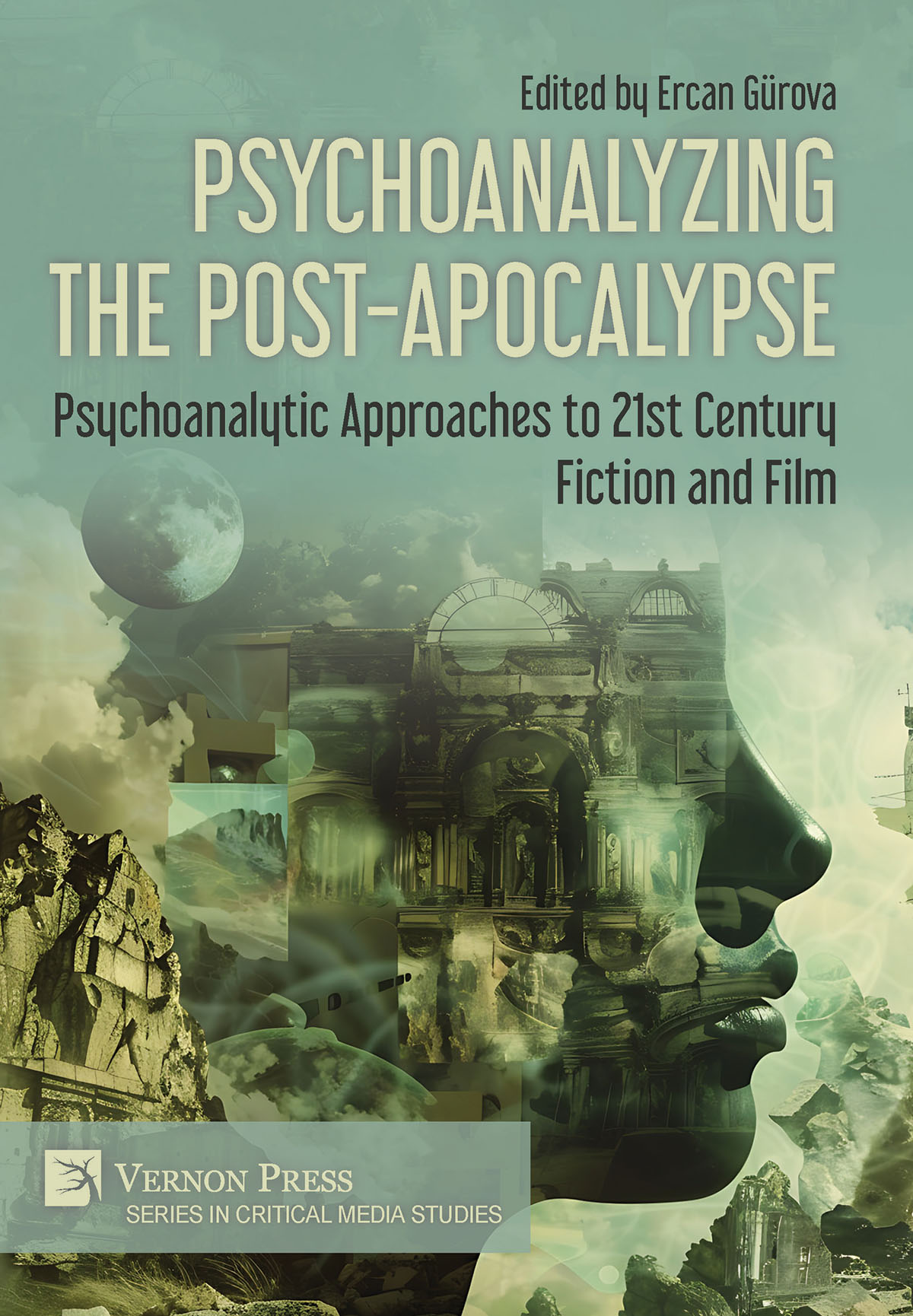
Psychoanalytic Approaches to 21st Century Fiction and Film
Edited by: Ercan Gürova (Ankara University, Turkey)
‘Psychoanalyzing the Post-Apocalypse: Psychoanalytic Approaches to 21st Century Fiction and Film’ offers an interdisciplinary exploration of contemporary post-apocalyptic literature and cinema through psychoanalytic theory. Bringing together studies of major novels, films, and television series, the volume demonstrates how Freudian, Lacanian, Jungian, and post-Lacanian perspectives illuminate recurring themes such as trauma, desire, mourning, identity, repression, survival, and psychic renewal in worlds shaped by catastrophe. The collection distinguishes itself by applying diverse psychoanalytic frameworks to a broad range of twenty-first-century texts, including "Oryx and Crake," "The Stone Gods," "Station Eleven," "War of the Worlds," "Vesper," "The Road," "The Leftovers," and "2012". Rather than offering generalized discussions of apocalypse, each chapter provides a theoretically grounded analysis of a specific work, revealing how narratives of collapse reflect contemporary anxieties while also imagining new forms of subjectivity, ethical relations, and resilience. Positioned at the intersection of psychoanalytic criticism, literary studies, film studies, and cultural theory, the volume advances current scholarship by foregrounding the psychological dimensions of post-apocalyptic storytelling and demonstrating the versatility of psychoanalytic approaches in interpreting ecological, technological, and existential crises. It contributes an original perspective to the growing body of research on post-apocalyptic fiction by integrating multiple psychoanalytic traditions across diverse media and cultural contexts. The book will serve as a valuable resource for researchers, graduate students, and advanced undergraduates in literature, film, media, psychoanalysis, and cultural studies. It is equally suitable for classroom adoption in courses on contemporary fiction, speculative literature, adaptation, and critical theory, while offering scholars a methodological framework for future interdisciplinary research on apocalypse and the human psyche.
A Survey of Olfactory Art
By: Sandra Barré (Université Paris 1 Panthéon-Sorbonne, France)
What if art history were written through the nose? 'Exhalations: A Survey of Olfactory Art' is the first comprehensive English-language book to trace a century of olfactory practices in art, from the Futurists’ early experiments with scent to the bacterial installations of Anicka Yi, from Marcel Duchamp’s sealed vial of Parisian air to the ecological interventions of Peter de Cupere. Through the analysis of more than one hundred works, Sandra Barré demonstrates the extent to which smell has shaped modern and contemporary artistic practice, despite its persistent marginalization within criticism and institutions. Neither a medium nor a unified movement, olfactory art spans from Dada, Arte Povera, Fluxus, body art, Land Art, feminist practices, to postcolonial critique. Its concerns are equally wide-ranging: memory, desire, decay, gender, and ecological crisis. In doing so, it unsettles the ocularcentrism that has dominated Western art history since the Enlightenment, the assumption that vision constitutes the primary mode of aesthetic knowledge. Smell operates differently. It enters the body immediately, resisting stable interpretation and singular meaning. Two individuals may encounter the same smell and experience entirely different realities, neither of which can be fully privileged over the other. Drawing on archival research, conversations with artists, and years of curatorial practice, 'Exhalations: A Survey of Olfactory Art' is both a historical survey and a history of encounters. The book advances a compelling and overdue argument: that smell has always been present within artistic practice, that it has always carried meaning, and that attending to it transforms our understanding of art history itself. Originally published in French in 2021 by 'Les Éditions de la Lettre Volée', 'Exhalations: A Survey of Olfactory Art' is translated into English by artist Emilie McDermott.
A Survey of Ecopoetics
Edited by: Lee Beavington (Kwantlen Polytechnic University) and Adam Vincent (Capilano University; The University of British Columbia, Canada)
No description available
Edited by: Brian Gran (Case Western Reserve University)
No description available
Teaching and Acquisition in Higher Education. Vol. 2
Edited by: Alberto Regagliolo (UKSW University)
'Italian as a Foreign Language: Teaching and Acquisition in Higher Education. Vol. 2' brings together twelve chapters written by scholars and university lecturers, all focusing on the teaching of Italian through a wide range of approaches. These range from inclusive and multisensory pedagogies to corpus-based learning, from grammar through use to debate-based teaching and content-focused courses (politics, ecology, food, health, culture, and identity). The book values plurality and dialogue, showing how different pedagogical perspectives can respond to diverse learning contexts and heterogeneous student profiles. What makes this volume distinctive is its strong connection between theory and practice. Each contribution is grounded in current research in applied linguistics and language pedagogy, while remaining firmly rooted in real university classrooms. Practical examples, teaching ideas, and reflections on course design make the book particularly useful for university instructors, teacher educators, and advanced students. At the same time, the volume can be read as a source of inspiration, as a methodological guide, or as a reference text for developing inclusive and meaningful Italian language courses in higher education.
Social Media and Youth Activism
By: Monica Pauls (Mount Royal University)
Young people’s lives are increasingly shaped by digital media, yet public and academic debates about youth, social media and well-being are often dominated by fear-based narratives that frame online spaces as inherently harmful. Against a backdrop of rising concerns about youth mental health and widespread anxieties about social media use, this book offers a critical and timely intervention into how we understand young people’s political and civic engagement in the digital age. Drawing on in-depth interviews with youth activists involved in the international climate change movement and the American gun control movement, alongside analysis of their social media practices, the book challenges binary distinctions between online and real-world activism. Rather than treating digital participation as superficial or ineffective, it foregrounds young people’s own perspectives on activism, demonstrating how digital platforms function as meaningful spaces for connection, organizing and political expression. Situated at the intersection of youth studies, sociology, media studies and political engagement, the book builds on and extends existing literature on digital activism by centring youth voices and lived experience. It offers a counter-narrative to the persistent “slacktivism” critique, arguing that such framings not only misunderstand contemporary activism but risk delegitimizing young people’s contributions to civic life. Written in an accessible style while grounded in rigorous social research, this book will be of interest to scholars, post-secondary students and practitioners working in education, youth work, child and youth care, social services and community organizing. It is suitable for classroom adoption, scholarly reference and professional reflection, and provides valuable insights for anyone seeking to better understand how young people are reshaping political participation in a digitally networked world.
Expressions of Afrikan Indigenous Self-Determination
Edited by: Ping-Ann Addo (University of Massachusetts Boston), Diana J. Fox (Bridgewater State University), and Nana Barouda Lubafu Isieni (Cynthia Ellis-Topsey) (Ambassador at Large, Garifuna Nation)
‘The Spirit of Marronage: Expressions of Afrikan Indigenous Self-Determination’ chronicles the rise of the United Maroon Indigenous Peoples (UMIP), a global movement rooted in the spiritual and political legacies of Afrikan-descended Indigenous communities. Interweaving scholarly discussions, critical personal narrative, poetry, visual art, and Indigenous curricula, the book explores sovereignty through land-based relations, communal governance, and sacred practices. It documents pivotal Maroon gatherings and outlines UMIP’s six founding pillars: Kpaale (Diasporic Citizenship and Spirituality), Mbongi (Learning Together), Uhuru (Freedom and Reparations), Gayap (Working for Common Cause), Ujima (Collective Responsibility), and Livity (Living Maroon Values). Serving as both an archive for Maroons and a guide for Indigenous Peoples reclaiming culture, it calls for shifts in academic engagement toward authentic allyship—centering Indigenous knowledges to transform relationships from transactional to reciprocal, and analyses from removed to restorative. A vital resource for educators, researchers, and activists pursuing ecological and social justice.
Bridging Innovation and Human Dignity in Remote and Hybrid Workspaces
Edited by: Leigh Maxwell (Edgewood University)
In a world permanently changed by the COVID-19 pandemic, 'Reimagining Work' offers a timely and urgent exploration of how work is being reshaped—and how it should be. This interdisciplinary volume brings together scholars and practitioners from communication, leadership, education, psychology, and organizational development to confront the challenges and possibilities of the evolving workplace. More than a reflection on remote and hybrid trends, this book is a call to rethink foundational questions: How do we honor human dignity in technologically mediated environments? What leadership strategies are needed to navigate generational dynamics, digital fatigue, and rapid innovation? How do communication technologies both enable and constrain productivity, connection, and inclusion? With historical depth and forward-looking insight, the contributors examine four central themes: (1) the theoretical and historical underpinnings of communication in digital workspaces; (2) the unique strengths and tensions of multigenerational teams; (3) the influence of communication technology on collaboration and performance; and (4) the ethical responsibilities of leaders in shaping a future of work that is both innovative and humane. At its core, 'Reimagining Work' centers the human experience. It argues that while AI and digital platforms are vital, they must serve—not replace—empathy, agency, and community. Leaders and organizations must design systems that are not only efficient and adaptable but also inclusive, equitable, and responsive to diverse needs. Whether you are an academic, a manager, a student, or a policymaker, this volume equips you with insights and frameworks to actively shape a future of work where technological advancement and human flourishing go hand in hand.
Volume 2: Representations
Edited by: Marco Maggi (Università della Svizzera italiana, Switzerland)
'Captioned Landscapes' is the first comprehensive monograph on intermedial combinations between writing and natural environments. Writing is traditionally considered as a distinctive sign of the human; interrogating its interactions with the world beyond the human means questioning its presumed centrality and separateness. The multiple angles from which these combinations are studied in this two-volume anthology are relevant for questions regarding the ontologies that structure the relationships between human and non-human, as well as for questions of ideology, interculturality, memory, gender and the postcolonial. Landscape reception studies usually assume not only a distinction but also a separation between the human and the non-human, attributing the privilege of subjectivity only to the former. This dualistic paradigm has been recently replaced by intermedial ecocriticism, which conceives the relationship between human and non-human as a negotiation without rigid and pre-established roles. However, attention has been focused so far on the representations (verbal, but also visual) of these relationships. In this monograph, for the first time, instead of representations of natural environments (in writing or other media), intermedial combinations between writing and landscapes are taken into account; particular attention is also paid, in the second volume, to verbal and visual representations of these combinations. The book addresses Intermedial and Visual Studies and Environmental Humanities scholars. Because of the specific focus on combinations of writing, landscape, and verbal and visual representations of the latter, the book is also aimed at scholars of Literature, Garden and Landscape Design and History, and Visual Arts. By virtue of the case study approach in the chapters and the general theoretical framework provided in the introduction, the book also addresses students of all these disciplines.