Loading...
Please wait while we load the content...

Loading...
Please wait while we load the content...
Loading...
Please wait while we load the content...
Explore peer - reviewed titles across the humanities and social sciences - rigorous research, fresh perspectives, and scholarship that inspires dialogue across disciplines.
Stay informed about our latest publications, calls for proposals, author news, events, and special announcements.
Join our community of scholars, librarians, authors, and readers and receive the latest updates from Vernon Press directly in your inbox.

From special discounts and global distribution partners to downloadable catalogs, flyers, and high-resolution covers, we make it easy to enrich your library’s collection. Access bibliographic data, explore subject-specific listings, and stay updated on forthcoming titles.
Become part of our librarian network and access dedicated tools, discounts, and resources to support collection development and promote new titles to your patrons.

Partner with Vernon Press to provide your customers with high-quality, peer-reviewed scholarship. We offer flexible ordering options, reseller agreements, and promotional materials to support your sales and outreach.

Vernon Press provides dedicated resources to help instructors adopt our books for courses and to support students with affordable access to high-quality scholarship. From desk and examination copies to tailored student editions, we aim to make our titles accessible in the classroom.
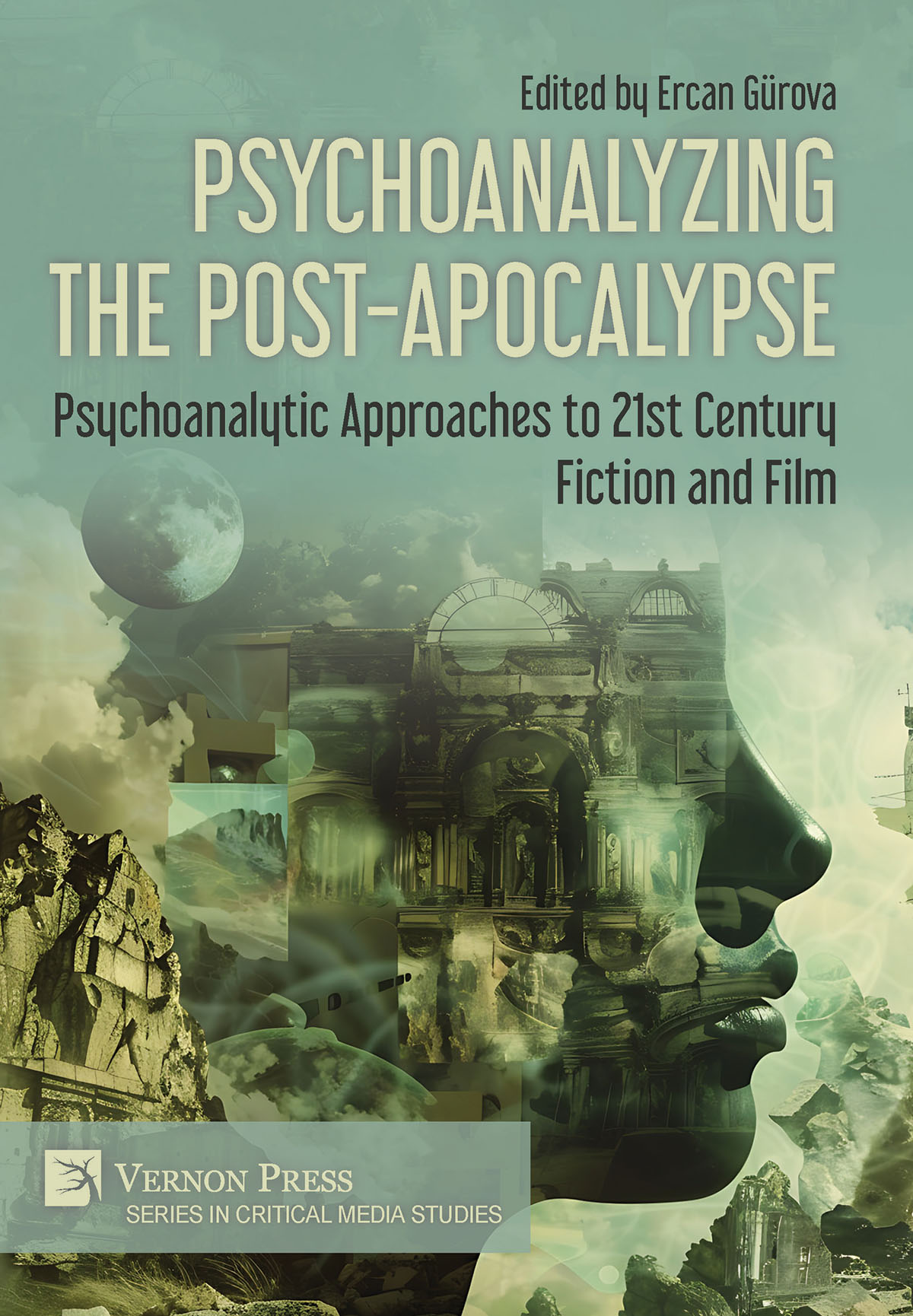
Psychoanalytic Approaches to 21st Century Fiction and Film
Edited by: Ercan Gürova (Ankara University, Turkey)
‘Psychoanalyzing the Post-Apocalypse: Psychoanalytic Approaches to 21st Century Fiction and Film’ offers an interdisciplinary exploration of contemporary post-apocalyptic literature and cinema through psychoanalytic theory. Bringing together studies of major novels, films, and television series, the volume demonstrates how Freudian, Lacanian, Jungian, and post-Lacanian perspectives illuminate recurring themes such as trauma, desire, mourning, identity, repression, survival, and psychic renewal in worlds shaped by catastrophe. The collection distinguishes itself by applying diverse psychoanalytic frameworks to a broad range of twenty-first-century texts, including "Oryx and Crake," "The Stone Gods," "Station Eleven," "War of the Worlds," "Vesper," "The Road," "The Leftovers," and "2012". Rather than offering generalized discussions of apocalypse, each chapter provides a theoretically grounded analysis of a specific work, revealing how narratives of collapse reflect contemporary anxieties while also imagining new forms of subjectivity, ethical relations, and resilience. Positioned at the intersection of psychoanalytic criticism, literary studies, film studies, and cultural theory, the volume advances current scholarship by foregrounding the psychological dimensions of post-apocalyptic storytelling and demonstrating the versatility of psychoanalytic approaches in interpreting ecological, technological, and existential crises. It contributes an original perspective to the growing body of research on post-apocalyptic fiction by integrating multiple psychoanalytic traditions across diverse media and cultural contexts. The book will serve as a valuable resource for researchers, graduate students, and advanced undergraduates in literature, film, media, psychoanalysis, and cultural studies. It is equally suitable for classroom adoption in courses on contemporary fiction, speculative literature, adaptation, and critical theory, while offering scholars a methodological framework for future interdisciplinary research on apocalypse and the human psyche.
A Survey of Olfactory Art
By: Sandra Barré (Université Paris 1 Panthéon-Sorbonne, France)
What if art history were written through the nose? 'Exhalations: A Survey of Olfactory Art' is the first comprehensive English-language book to trace a century of olfactory practices in art, from the Futurists’ early experiments with scent to the bacterial installations of Anicka Yi, from Marcel Duchamp’s sealed vial of Parisian air to the ecological interventions of Peter de Cupere. Through the analysis of more than one hundred works, Sandra Barré demonstrates the extent to which smell has shaped modern and contemporary artistic practice, despite its persistent marginalization within criticism and institutions. Neither a medium nor a unified movement, olfactory art spans from Dada, Arte Povera, Fluxus, body art, Land Art, feminist practices, to postcolonial critique. Its concerns are equally wide-ranging: memory, desire, decay, gender, and ecological crisis. In doing so, it unsettles the ocularcentrism that has dominated Western art history since the Enlightenment, the assumption that vision constitutes the primary mode of aesthetic knowledge. Smell operates differently. It enters the body immediately, resisting stable interpretation and singular meaning. Two individuals may encounter the same smell and experience entirely different realities, neither of which can be fully privileged over the other. Drawing on archival research, conversations with artists, and years of curatorial practice, 'Exhalations: A Survey of Olfactory Art' is both a historical survey and a history of encounters. The book advances a compelling and overdue argument: that smell has always been present within artistic practice, that it has always carried meaning, and that attending to it transforms our understanding of art history itself. Originally published in French in 2021 by 'Les Éditions de la Lettre Volée', 'Exhalations: A Survey of Olfactory Art' is translated into English by artist Emilie McDermott.
A Survey of Ecopoetics
Edited by: Lee Beavington (Kwantlen Polytechnic University) and Adam Vincent (Capilano University; The University of British Columbia, Canada)
No description available
Volume 2: Representations
Edited by: Marco Maggi (Università della Svizzera italiana, Switzerland)
'Captioned Landscapes' is the first comprehensive monograph on intermedial combinations between writing and natural environments. Writing is traditionally considered as a distinctive sign of the human; interrogating its interactions with the world beyond the human means questioning its presumed centrality and separateness. The multiple angles from which these combinations are studied in this two-volume anthology are relevant for questions regarding the ontologies that structure the relationships between human and non-human, as well as for questions of ideology, interculturality, memory, gender and the postcolonial. Landscape reception studies usually assume not only a distinction but also a separation between the human and the non-human, attributing the privilege of subjectivity only to the former. This dualistic paradigm has been recently replaced by intermedial ecocriticism, which conceives the relationship between human and non-human as a negotiation without rigid and pre-established roles. However, attention has been focused so far on the representations (verbal, but also visual) of these relationships. In this monograph, for the first time, instead of representations of natural environments (in writing or other media), intermedial combinations between writing and landscapes are taken into account; particular attention is also paid, in the second volume, to verbal and visual representations of these combinations. The book addresses Intermedial and Visual Studies and Environmental Humanities scholars. Because of the specific focus on combinations of writing, landscape, and verbal and visual representations of the latter, the book is also aimed at scholars of Literature, Garden and Landscape Design and History, and Visual Arts. By virtue of the case study approach in the chapters and the general theoretical framework provided in the introduction, the book also addresses students of all these disciplines.
Edited by: Jennifer P. Kingsley (Johns Hopkins University), Cindy Persinger (Pennsylvania Western University), and Rosemarie Trentinella (The University of Tampa)
At a moment when various uncertainties surround higher education, 'Advocating for Art History' offers theory-informed investigations, case studies, and actionable strategies to empower art historians to assess their individual policy environments and institutional contexts, recognize their spheres of influence, and develop strategic approaches to advocacy that leverage their expertise as educators and researchers. Edited by Jennifer P. Kingsley, Cindy Persinger, and Rosemarie Trentinella, the volume draws on its contributors’ decades of experience across diverse types of public and private institutions—from R-1 universities to liberal arts colleges as well as a medical school and military academy. Chapters share successes and failures, strategies for securing and maintaining institutional support, analysis of art history’s distinctive contributions to skill and professional development as well as of the discipline’s broader value as a social good. Together, the chapters present a nuanced picture of the current moment, in which art history’s perceived vulnerabilities intersect with (and serve) broader narratives about the humanities and higher education’s supposed failures—complexities the book examines and largely counters. Capturing a broad spectrum of contemporary art historical advocacy, 'Advocating for Art History' argues that the discipline’s future depends on art historians actively participating in shaping their institutions’ priorities, making their work visible across a variety of stakeholders both within and beyond the academy, and building collective momentum. Above all, it aims to spark reflection and essential conversations about the discipline’s future, and champions the potential for positive action. It is an essential resource for anyone invested in sustaining the humanities in higher education.
Questioning the Technical Image in a Digital Age
Edited by: renée c. hoogland (Wayne State University)
This collection of essays explores the complexities of the photographic image in the wake of the digital turn. While the digital image has, in effect, effaced the necessity for a pre-existing “reality,” the presumed indexical function of the photographic image has by no means disappeared—technical images continue to organize, if not generate, our shifting modes of perception. How do we reconsider analog photographs, given that they can and are likely to show up on a variety of digital platforms? How do we re-view technical images that make the invisible visible, given that current imaging technologies generate new visualities as such? How does the digital force us to reconceptualize the analog? Individual chapters engage with a range of technical images approached from various critical and/or theoretical perspectives. One focuses on composite photographic portraits in eugenics and in contemporary art through Deleuze and Guattari’s notion of facility. Another assumes a pedagogical approach that pursues the photographic as a metaphor for knowledge practices through staging embodied encounters with digital living. Another explores the work of the artwork through a study of contemporary art photography by means of object-oriented ontology and new aesthetic realism. Yet another presents an infographic genealogy that tracks the technical image across a modernist telematic media-verse. One chapter offers a critical exploration of a silent film hero through her various analog and digital incarnations. Another explores a Lacanian-inspired perspective on the consequences of the shift from analog to digital for the subjects in front of the camera, the posers. One chapter focuses on the analog Anthropocene through an investigation of an Italian film factory and its material and human legacies. A final contribution investigates the relationship between photography and disaster through a discussion of a triple disaster—the earthquake, tsunami, and nuclear accident that occurred in Japan in 2011.
Volume 1
Edited by: Katy Deepwell
It could be said all new research contains a “re-evaluation” of past work but these two volumes attempt a re-evaluation of feminist research in contemporary art as it has developed over the last 50 years in relation to different local/global dynamics and/or about certain artists, artworks or exhibitions. Feminism(s) aim was to interrogate existing histories and provide significant corrections to what constitutes “history”. The two volumes explore some of the ways feminism(s)’ challenges have changed museums’ curatorial practices, critical writing and art history and how feminism itself has been transformed over time and its presence in many locations. Feminism’s absence from the stories told today about the recent past and present of contemporary art represents a starting point for these essays to explore the different strategies that have been attempted in cultural and political terms and to offer fresh assessments. Their re-evaluation of artists, artworks and exhibitions goes beyond questions of reputation or recognition, to embrace questions about identifying issues in feminist research, engaging in collective work and re-examining the personal in relation to politics/aesthetics. These volumes include different voices and perspectives on feminism and contemporary art from many parts of the world by academics, critics, artists, curators and researchers. Volume 1 has three sections that each address local and transnational issues in interpretations of feminism and amongst exhibiting artists through considering local/global dynamics and/or national frameworks (section 1); feminist cultural politics within exhibitions and writing exhibition histories (section 2) and within histories of conflicts in different local/national situations (section 3). The writers come from North Macedonia, UK, Iran, USA, China, Poland, Austria, The Netherlands, Italy, Spain, Ukraine, Latin America and Latvia – and their work engages work undertaken in Japan, Thailand, France, Vietnam, Mexico, Argentina and Brazil.
Volume 1: Places
Edited by: Marco Maggi (Università della Svizzera italiana, Switzerland)
'Captioned Landscapes' is the first comprehensive monograph on intermedial combinations between writing and natural environments. Writing is traditionally considered as a distinctive sign of the human; interrogating its interactions with the world beyond the human means questioning its presumed centrality and separateness. The multiple angles from which these combinations are studied in this two-volume anthology are relevant for questions regarding the ontologies that structure the relationships between human and non-human, as well as for questions of ideology, interculturality, memory, gender and the postcolonial. Landscape reception studies usually assume not only a distinction but also a separation between the human and the non-human, attributing the privilege of subjectivity only to the former. This dualistic paradigm has been recently replaced by intermedial ecocriticism, which conceives the relationship between human and non-human as a negotiation without rigid and pre-established roles. However, attention has been focused so far on the representations (verbal, but also visual) of these relationships. In this monograph, for the first time, instead of representations of natural environments (in writing or other media), intermedial combinations between writing and landscapes are taken into account; particular attention is also paid, in the second volume, to verbal and visual representations of these combinations. The book addresses Intermedial and Visual Studies and Environmental Humanities scholars. Because of the specific focus on combinations of writing, landscape, and verbal and visual representations of the latter, the book is also aimed at scholars of Literature, Garden and Landscape Design and History, and Visual Arts. By virtue of the case study approach in the chapters and the general theoretical framework provided in the introduction, the book also addresses students of all these disciplines.
By: James H. Rubin (Stony Brook, State University of New York)
The painter Edouard Manet (1832-1883) was a central figure for momentous and lasting changes in the realm of art that still resound today. His art speaks directly to the philosophical issues and political conflicts of his own time and is therefore deeply embedded in the development of modernity. 'Manet’s Ironic Duplicity' focuses on that situation and the historically conscious artist’s sometimes ambivalent struggle for authenticity. Rather than another full chronological monograph, the book is an interdisciplinary study organized around key concepts. It reframes the major, and sometimes disparate issues in Manet scholarship by focusing on a never-before-considered overriding theme—duplicity—which itself is multiple in its manifestations and variants, hence 'duplicities'. Reversing the usual narrative, this study deconstructs and enlightens the myth of the heroic artist struggling for individual and original vision by revealing how so much of Manet’s creativity and irony was prompted by frustrations due to repressive politics, censorship, and challenges to his sense of self. A key aspect of the latter was his masculinity. Although Manet’s association with the ideas of the poet and critic Charles Baudelaire is well known, never has Baudelaire’s essay 'On the Essence of Laughter and the Comic in the Visual Arts' been brought to bear on the concept of irony in Manet’s work. Given Baudelaire’s rapprochement between actors and artists, as well as Manet’s familiarity with the theatrical milieu, the book focuses on Manet’s two little-studied representations of 'Hamlet' as both the starting and end point of its analysis. It then concludes with a re-reading of the painter’s illustrated letters to women as a dissimulation of his final, fatal illness in order to maintain his masculine honor.